

Master Skills, Change Your Future | China Craftsman Valley Delegation visited the 48th WorldSkills Competition
Release time:Sep 24,2026
On September 22, 2026, the 48th WorldSkills Competition grandly opened in Shanghai. Chinese President Xi Jinping sent a congratulatory letter to the competition. Premier of the State Council Li Qiang attended the opening ceremony and declared the competition open. A total of 1,385 young skilled competitors from 68 countries and regions gathered in Shanghai for this grand event known as the “WorldSkills Olympics.” On the morning of the 23rd, the WorldSkills Congress, themed “Skills Light Up the Future,” kicked off as the core academic and policy forum under the framework of the competition. Premier Li Qiang attended the opening ceremony and delivered a speech.

Delegation Visit: Learning Insights at the Pinnacle of Global Skills
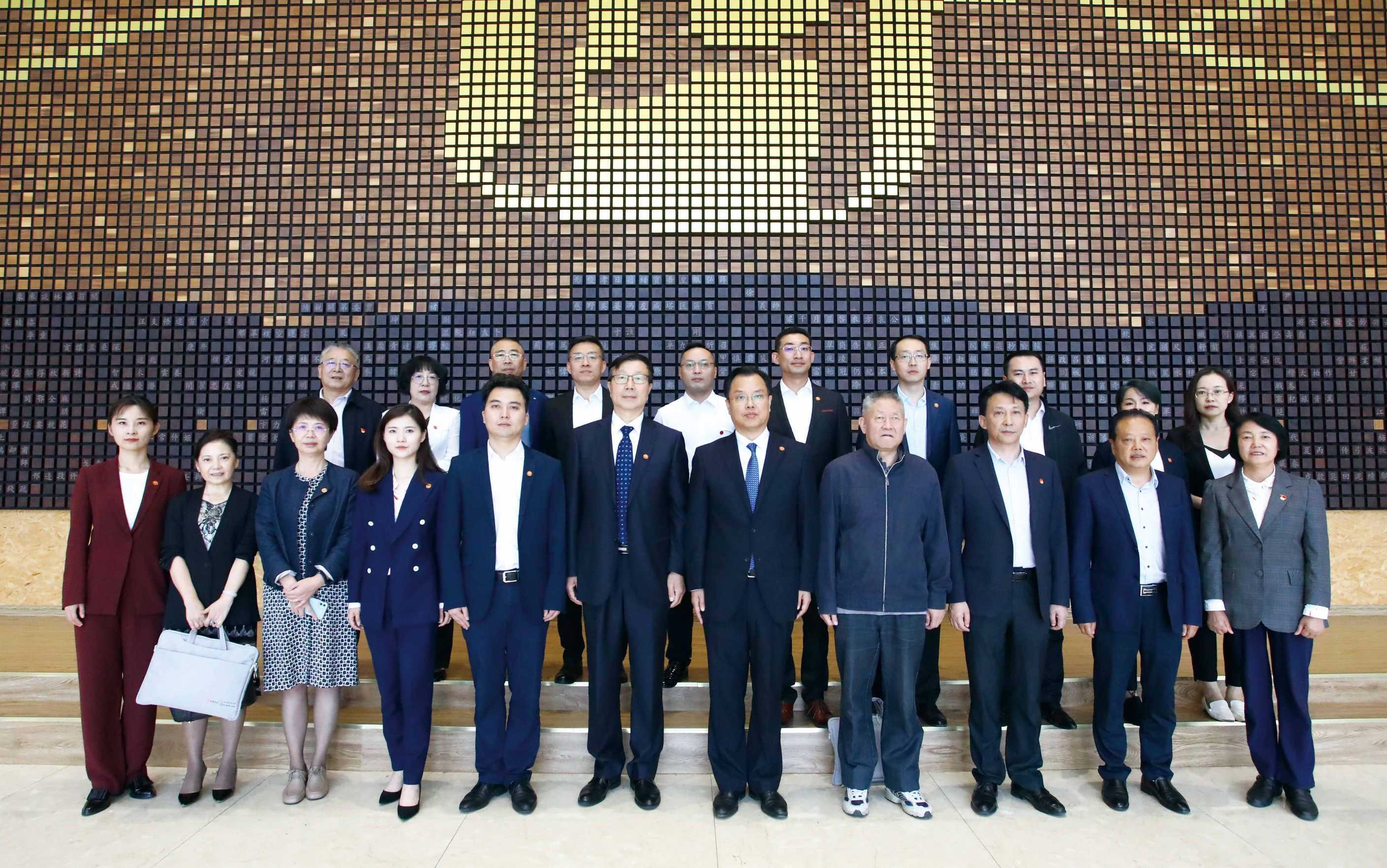
Amid this “Eastern gathering” of the global skills community, a substantial delegation from China’s vocational education sector—the China Craftsman Valley delegation—traveled to Shanghai to observe and learn, bringing with them practical achievements in industry-education integration and explorations in international talent cultivation.
This was no ordinary observation trip. The delegation comprised multiple levels, including operators of industry-education integration platforms, administrators of vocational colleges, frontline skills instructors, and domestic and international young students. Participants from different backgrounds all came with clear learning objectives: administrators from the Beijing Caofeidian International Vocational Education Town focused on the direction of building a global skilled talent cultivation system; frontline teachers concentrated on technical standards and training methods for corresponding competition modules; and young students took top competitors as role models, experiencing the charm of skills competition through close-up observation—using observation to promote learning and benchmarking to strengthen training.
Many students expressed that witnessing the razor-thin margins of competition among international contestants at the WorldSkills site gave them a deeper understanding of the craftsmanship spirit of “striving for perfection and pursuing excellence.” Upon returning to campus from Shanghai, they will bring back what they saw, thought, and learned from the WorldSkills Competition to their practical training workshops and classrooms, transforming international competition standards into references for daily training. This will encourage fellow students to benchmark against WorldSkills standards, hone their skills diligently, accumulate experience, and clarify directions for future participation.

Relevant institutions under China Craftsman Valley will also take this WorldSkills observation opportunity to optimize practical training curricula, organize on-campus skills selection competitions, discover and reserve promising young students, and gradually establish a talent pipeline extending from on-campus training and campus-level selection to WorldSkills Talents cultivation. This aims to build upward pathways for ordinary students with skills dreams.
From China Craftsman Valley to the WorldSkills stage, identities and perspectives may change, but the original aspiration of “benchmarking against international standards and strengthening internal capabilities” remains unchanged—first understand the heights of the world, then pinpoint your own coordinates. This observation and exchange were not only a practice of mutual learning and growth for teachers and students, but also truly embedded the educational value of WorldSkills into the growth journey of every vocational education student.
Voices at the Forum: Bridging Quality Vocational Education Resources Across Borders
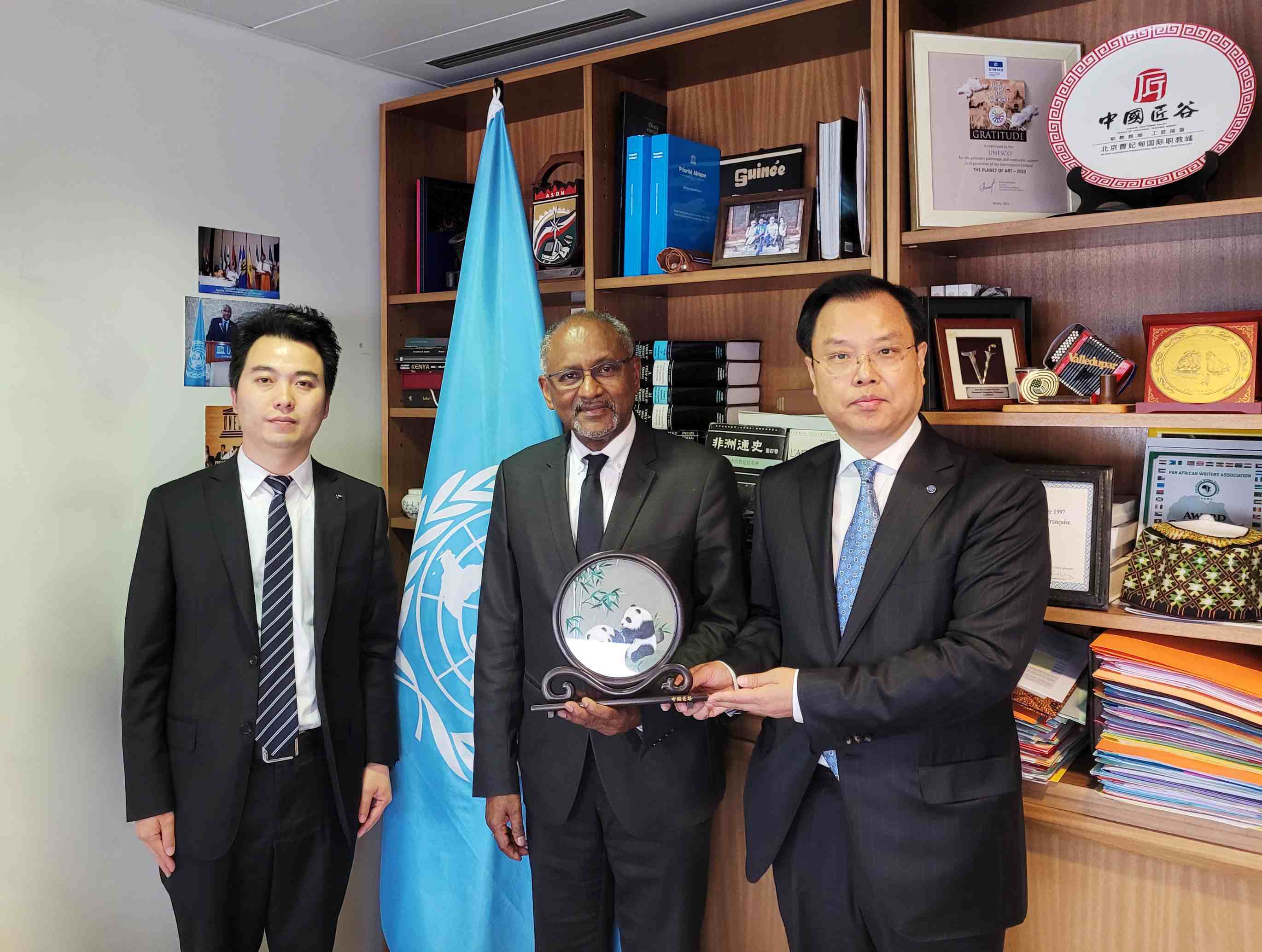
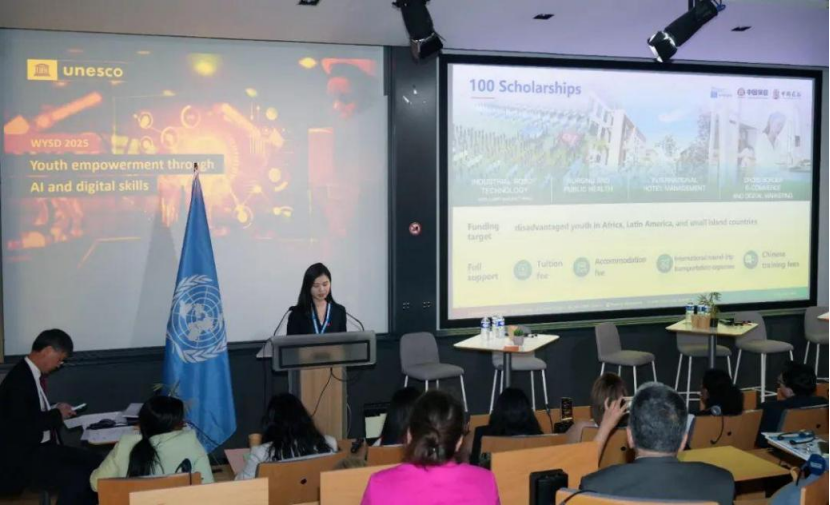
On the afternoon of September 23, the Global Skills Academy (GSA) Thematic Forum, as a core parallel forum of the WorldSkills Conference, was successfully held in Shanghai. It brought together representatives from UNESCO, the industry sector, and implementing partners to jointly explore: what “future-oriented skills” truly mean in an AI-driven economy; which cooperation models can effectively function and be scalable; and how global professional resources can help countries improve their skills systems and build development pathways toward employment, entrepreneurship, and lifelong learning. The China Craftsman Valley delegation was invited to attend.

At the forum, Ms. Sun Aiping, Executive Vice President of China POCY Group, delivered a keynote speech. Ms. Sun introduced that, as a partner of UNESCO’s Global Skills Academy, the institutions under the Beijing Caofeidian International Vocational Education Town, affiliated with China POCY Group, rely on the “World Vocational and Technical Education and Training Base” to implement the “100 Global Skills Youth Scholarship Program.” This program provides systematic training in “Chinese Language + Vocational Skills” for young people from developing countries, building pathways for international youth to achieve success through skills. Since its launch, the project has welcomed its first batch of overseas trainees to China for study and training, marking a critical leap from “international initiative” to “tangible practice.”

Addressing global vocational education colleagues, she put forward three initiatives: uphold inclusive skills development and promote cross-border flow of quality vocational education resources to create equal learning opportunities for youth in underdeveloped regions; deepen industry-education collaboration and ensure education standards keep pace with industrial upgrades to cultivate composite skilled talents that meet future industry demands; and expand partnership networks by encouraging mutual learning among institutions across countries to jointly build an open and inclusive global skills ecosystem, shaping a sustainable future through the power of skills. Following these initiatives, representatives from multiple countries engaged in intensive exchanges and connected with the delegation on topics such as scholarship program implementation, cross-border skills training, and deep school-enterprise cooperation. One speech turned into a round of tangible cooperation negotiations; one initiative transformed into a set of tangible cooperation intentions. This is the best proof of how China uses the “soft power” of vocational education to build a “hard support” for high-quality development, allowing Chinese solutions to be seen, understood, and referenced on a broader stage.
Youth Engagement: Lighting Up Skills Dreams for Global Youth
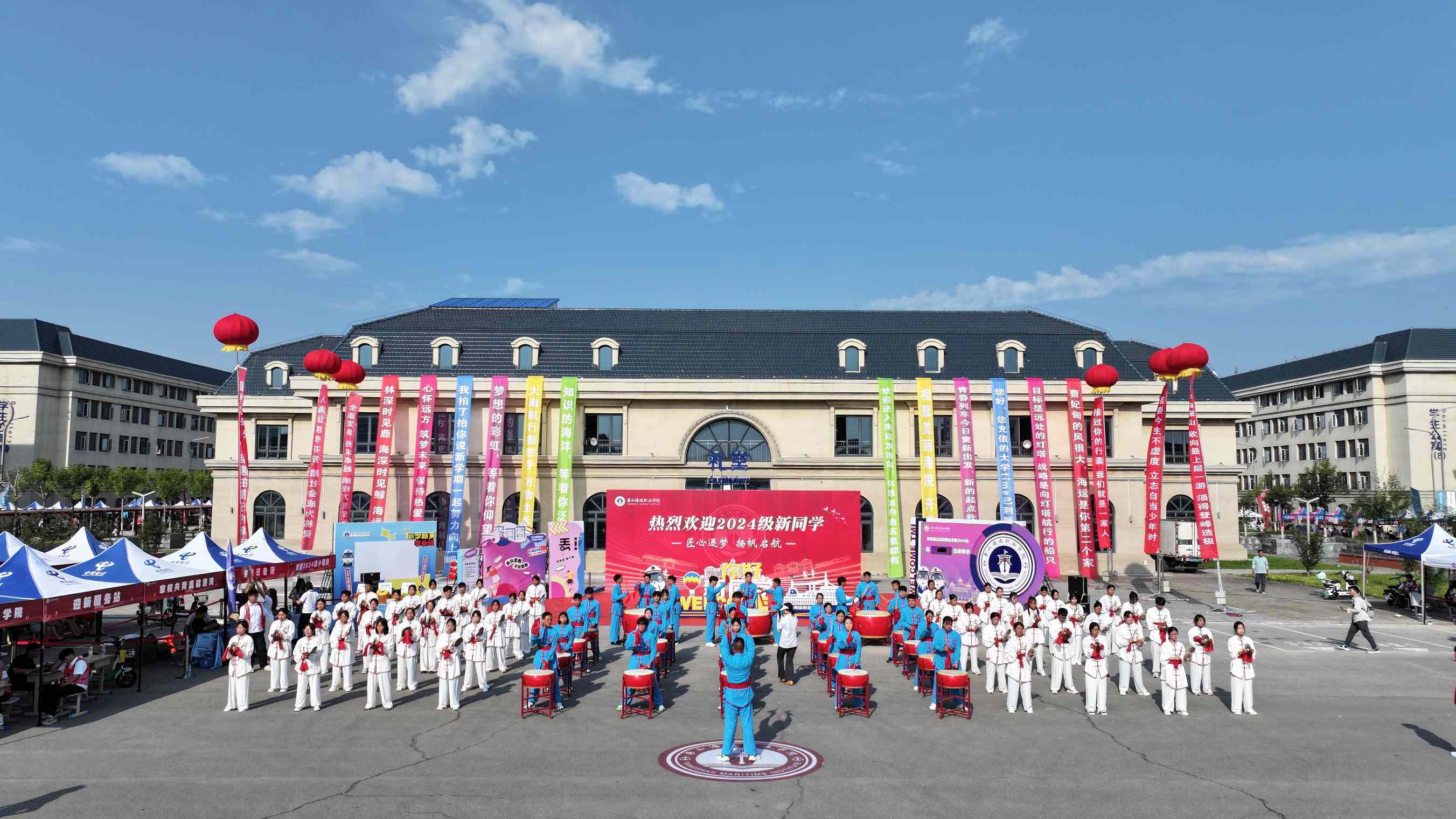
Also appearing alongside the delegation were representatives of the first cohort of overseas trainees under the “100 Global Skills Youth Scholarship Program.” At the parallel forum, these young people from different countries sincerely expressed their gratitude, deeply thanking China POCY Group, Caofeidian College of Technology, and Tangshan Maritime Institute for building an international platform for skills growth. This platform enabled them to cross borders and come to China for further study and advanced training. From initially learning Chinese and basic skills knowledge online, to receiving scholarships to pursue advanced studies at China Craftsman Valley institutions in China, and then entering practical training bases for hands-on practice under enterprise mentors—every detail in their stories reveals the real trajectory of how skills can change lives.

A seed crossing national borders and taking root in another soil—this is the deepest significance of the “100 Global Skills Youth Scholarship Program.” It translates the internationalization of vocational education from macro-level conceptual declarations into the concrete growth journeys of individual young people. When “Chinese Language + Vocational Skills” becomes a training paradigm, and when the closed-loop model of “industry raises demand → training provides precise supply → talents gain recognition → capabilities continue to improve” gradually takes shape, what it carries goes far beyond knowledge and technology—it embodies the sincerity of mutual learning among civilizations and the responsibility of a shared future.

The successful completion of training by the first cohort of trainees not only validates the feasibility of this training model but also accumulates valuable experience for the subsequent promotion of the program. Guided by the philosophy of openness and sharing, more global youth with skills dreams will come to China through this program to seize growth opportunities, and then return to their hometowns with their gains, inspiring more people to embark on the path to success through skills.
This, perhaps, is the simplest yet profound footnote to “shaping a skills-driven future.”
China Craftsman Valley’s Responsibility: Contributing Chinese Solutions to the Future of Skills
David Hoey, CEO of WorldSkills International, once commented that China has the world’s largest vocational and technical education and training system, and hosting the WorldSkills Competition will further advance China’s skills development.

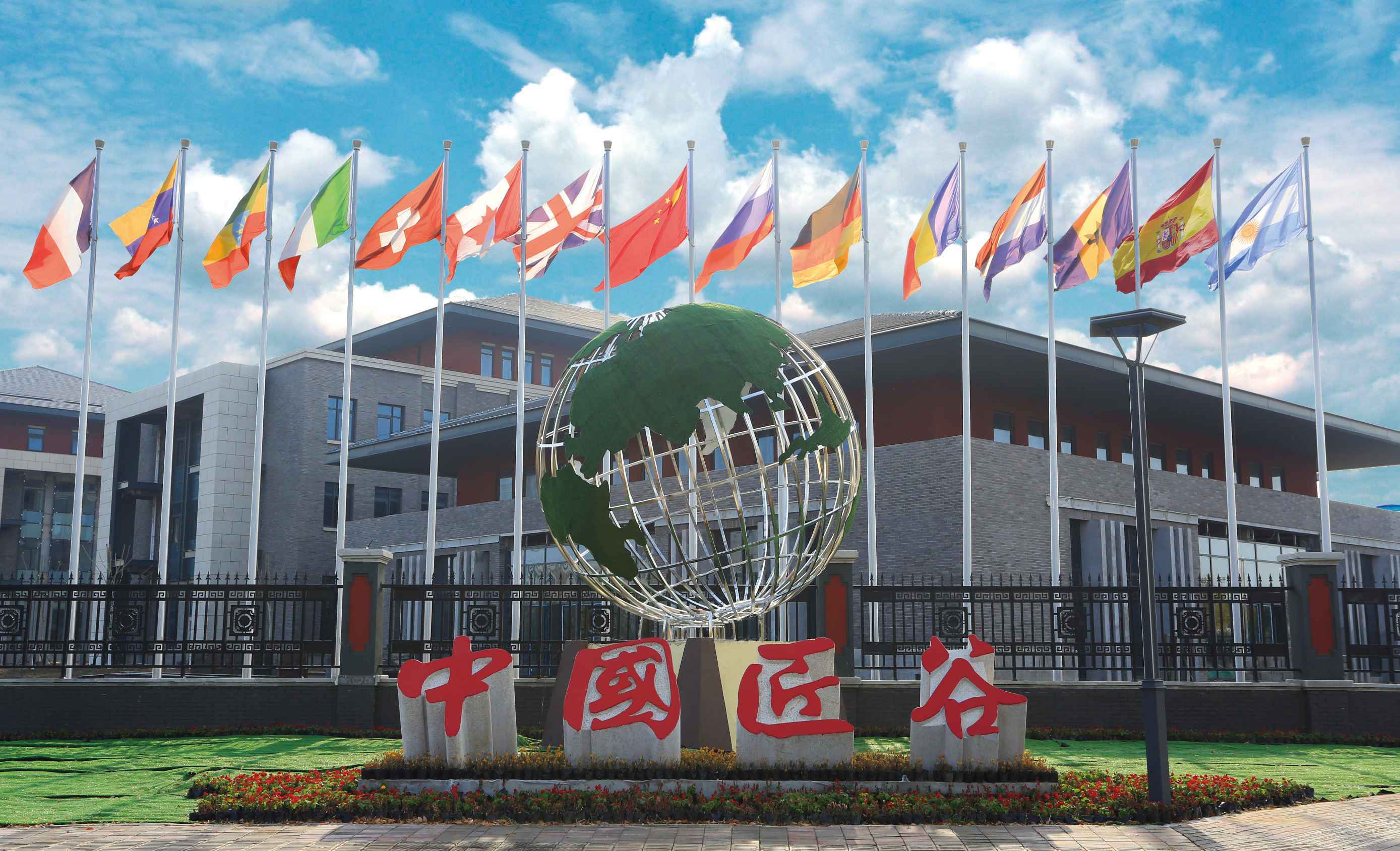
From Caofeidian on the shores of the Bohai Sea to Shanghai on the banks of the Huangpu River, it has taken China Craftsman Valley ten years to step onto the stage of the WorldSkills Competition. Over a decade of exploration, China Craftsman Valley has carved out a distinctive path in vocational education featuring “industry-education integration, convergence of science and education, and Chinese-foreign connectivity.” On one end, it closely connects with industry, moving classrooms into workshops and establishing majors along industrial chains; on the other end, it embraces the world, benchmarking against international skills standards and bringing Chinese vocational education experience to the global stage.
This path is both a steady growth journey walked step by step by Chinese skilled talents, and an open road along which Chinese vocational education proactively connects with the world and integrates into the global skills development network. As the spotlight of world-class events shines on China, vocational education forces represented by China Craftsman Valley are contributing “Chinese solutions” to global skills governance and injecting “skills power” into building a community with a shared future for mankind, with an open attitude and pragmatic actions.
China Craftsman Valley: World Skills Learning Destination!


All rights reserved by POCY Investment Group Co., Ltd.Beijing ICP No. 17057225-1 Beijing Public Security Bureau No. 11010802030354
Contact us

Address:8th Floor, Block D, Yonggui Center, No. 45, Guangqumennei Street, Dongcheng District, Beijing

Telephone:+86 (10) 67108886

Email:pocy@pocy.com