

China POCY Group Shines at the Global Smart Education Conference 2026 — “Smart Villages and Rural Education Transformation“ Parallel Forum
Release time:Aug 21,2026
On the morning of August 18, 2026, the Global Smart Education Conference2026, jointly organized by Beijing Normal University and the UNESCO Institute for Information Technologies in Education (IITE), opened in Beijing. Themed “Artificial Intelligence and Sustainable Development in Education,“ the conference brought together experts, scholars, and frontline educators from the fields of education, technology, and industry worldwide. Participants shared new theories, technologies, and practices in smart education, exploring sustainable pathways for the deep integration of AI and education, and seeking new models for equitable, inclusive, and high-quality global education development in the intelligent era. Vice Minister of Education Ren Youqun attended the opening ceremony and delivered a keynote address.

The conference ran from August 18 to 20, featuring over 20 events including plenary sessions, parallel forums, and special activities, covering the full spectrum of education — from early childhood, basic education, higher education, vocational education, to lifelong learning. Topics included AI governance in education, personalized student growth and well-being, future teachers, future classrooms, future schools, future learning centers, the integration of science and education, and industry-education integration, as well as rural education, special education, learning sciences, and smart society experiments.
On the morning of August 20, as a key segment of the conference, the “Smart Villages and Rural Education Transformation“ parallel forum was held at the Beijing Normal University Changping Campus. Co-organized by the UNESCO International Research and Training Centre for Rural Education (INRULED), the SEAMEO Regional Centre for Science and Mathematics Education, the SEAMEO Regional Centre for STEM Education, and Obreal, the forum attracted over 100 on-site participants including policymakers, international organization representatives, institutional delegates, and industry practitioners from China, Southeast Asia, and parts of Africa. Discussions centered on leveraging digital technologies to bridge the urban-rural education gap and rural talent development.

Mr. Zhou Zuoyu, Director of UNESCO INRULED and Deputy Director of the University Council of Beijing Normal University, Mr. Azman bin Jusoh, Director of SEAMEO RECSAM, and Mr. Nicolás Patrici, Director of Education Policy and Programs at Obreal, delivered opening remarks, calling for strengthened international cooperation and the use of AI and digital technologies to empower rural education transformation.


During the invited keynote session, Mr. Liu Baoxiang delivered a special report titled “From Public Welfare Education to Skilled Talent Development — China POCY Group‘s Vocational Education Pathway for Rural Revitalization.“ He noted that from its early involvement in rural education, China POCY Group has consistently taken industrial demand as its core orientation, making the cultivation of “practical skilled talents who can stay and serve their hometowns“ the central goal of its rural vocational education efforts.

At the domestic practice level, China POCY Group, grounded in the realities of rural development, has continuously implemented the “Craftsman Project“ public welfare initiative and local talent development programs in multiple locations including Huayuan County in Hunan and Qinglong County in Hebei. It has gradually built a Chinese-style smart education empowerment system for sustainable rural development, with “Craftsman Valley public welfare as the foundation, smart education as the wings, vocational skills as the core, and local talent as the foundation,“ precisely addressing challenges such as rural talent shortages and weak educational resources.
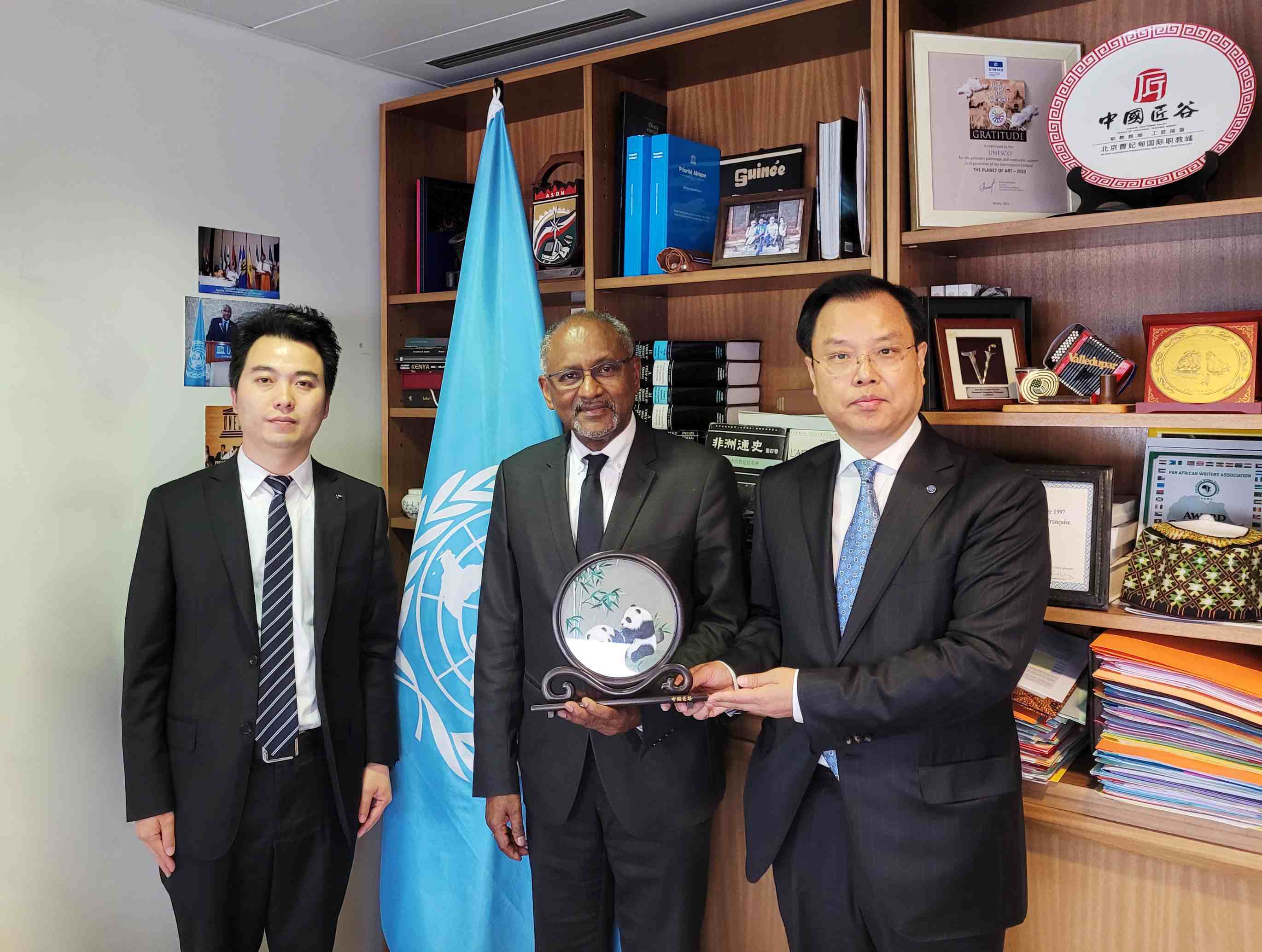
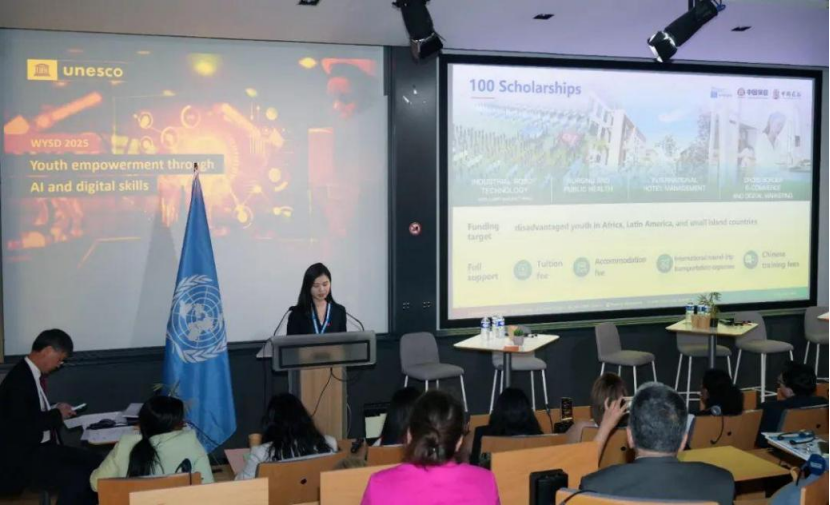
On the international empowerment front, the Group has actively collaborated with the UNESCO Global Skills Academy (GSA) to launch the “Global Youth Skills Scholarship Program,“ providing inclusive and professional vocational skills training to young people in underdeveloped regions worldwide, supporting their skills development and self-reliance. At the forum, the first cohort of 35 international students from seven countries — Kenya, Tanzania, Rwanda, South Africa, Madagascar, Costa Rica, and Jamaica — shared their growth experiences and demonstrated acquired skills, becoming a highlight of the event.

In an era of AI-driven educational transformation, rural education transformation cannot stop at digital infrastructure — it requires a systemic reshaping of talent development models. Unlike traditional public welfare education that focuses solely on hardware donations and tuition subsidies, China POCY Group deeply integrates talent cultivation, industrial development, and employment matching, forging a distinctive development pathway characterized by “supporting industrial development through vocational education, driving employment and income growth through skills training, and upgrading education supply through digital empowerment.“ This offers a replicable and scalable solution for rural education transformation in underdeveloped regions worldwide.
Looking ahead, China POCY Group remains committed to the mission of technology for good and educational equity, continuously refining its rural talent development model. With accessibility as its foundation, it will continue to bring high-quality educational resources to grassroots communities, building an inclusive and open education resource-sharing platform. With relevance as its core, it will keep pace with global industrial transformation and market demands, developing a modern talent cultivation system that integrates industry and education and aligns supply with demand. With digital intelligence as its engine, it will deepen the integration of digital technology and vocational skills, creating smart education application scenarios featuring precision teaching and human-machine collaboration. With sustainability as its guide, it will strengthen international cooperation mechanisms and multi-stakeholder collaboration, fostering a long-term, symbiotic, and mutually beneficial global education development ecosystem — extending skills empowerment to more rural and underdeveloped communities, and contributing to global educational equity and sustainable rural development.



All rights reserved by POCY Investment Group Co., Ltd.Beijing ICP No. 17057225-1 Beijing Public Security Bureau No. 11010802030354
Contact us

Address:8th Floor, Block D, Yonggui Center, No. 45, Guangqumennei Street, Dongcheng District, Beijing

Telephone:+86 (10) 67108886

Email:pocy@pocy.com